What New-Equivalent Performance Actually Means in Truck Remanufacturing?
Intro
“New-equivalent performance” is one of the most frequently misused phrases in the heavy truck remanufacturing industry. Many refurbishment vendors market their rebuilt trucks as “as good as new” purely based on clean paint and fresh trim. Under the REMAN ROAD standard, new-equivalent performance is not a marketing slogan. It is a measurable, auditable performance baseline: the remanufactured truck meets or satisfies the original OEM design performance envelope for its platform, even though the structural core is not a brand-new casting. This article clarifies the definition, what it covers, what it does not promise, and how fleets can verify it before purchase.
It is tied to OEM design intent, not the latest new model specs
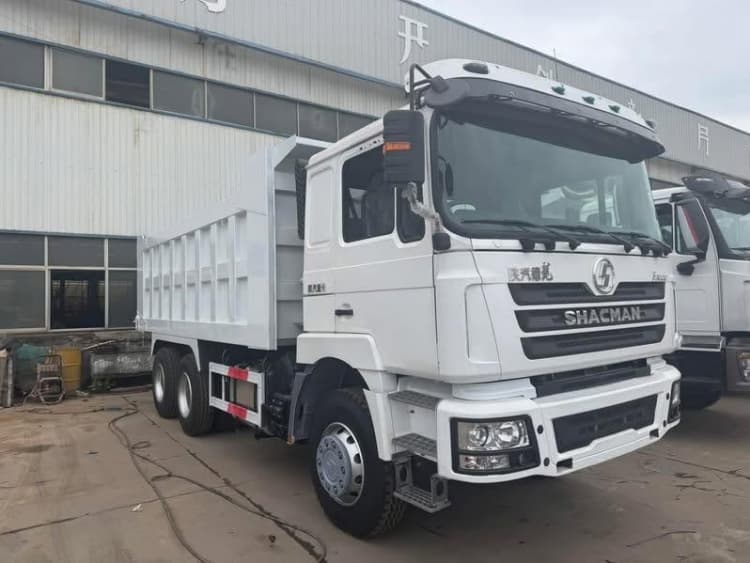
The first critical boundary: new-equivalent refers to the original engineering specification of that exact truck platform, not the newest truck generation currently sold by the OEM.
- A remanufactured truck is held against the load rating, torque curve, braking capacity and design margins defined when that platform was engineered.
- It is not required to match fuel efficiency, emission hardware or electronic features of the latest factory model.
- The goal is to restore what the truck was designed to deliver, not to upgrade it into a newer vehicle.
This distinction eliminates false expectations for fleets. Buying a certified remanufactured truck will not magically bring it up to the next emission tier or latest aerodynamic standard.
It covers structural load capacity and fatigue safety margin
For heavy trucks, performance starts with load-bearing capability. This is the most important component of new-equivalent status.
- Frame rails, axles, kingpins, suspension brackets and other load-carrying components are inspected via mandatory NDT, dimensional checks and straightness validation.
- After restoration, the remaining fatigue safety margin must fall within the OEM allowable design range.
- If a frame is bent beyond correction limits, or hidden cracking reduces its safety reserve, it is scrapped and cannot be used in a certified build.
New-equivalent structural performance means the truck can safely carry its rated payload, repeatedly, without elevated risk of sudden structural failure.
Powertrain and hydraulic performance are validated via bench testing
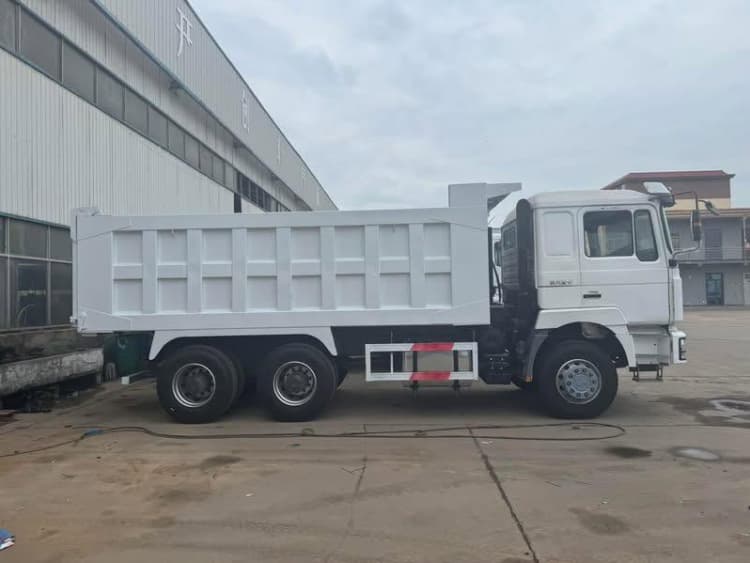
Functional performance of engines, transmissions and hydraulic assemblies cannot be judged visually. Bench testing is the proof point.
- Engines must hit the rated power and torque curve within OEM tolerance bands on the dynamometer. Smoke, oil consumption and pressure metrics must meet acceptance thresholds.
- Transmission shift quality, torque transfer and internal pressure profiles are tested to factory benchmarks.
- Hydraulic circuits for tippers, cranes and auxiliary systems must hold pressure without leakage over defined test cycles.
This is where certified heavy truck remanufacturing separates from simple overhaul. An overhaul may run smoothly at idle; a certified remanufactured truck must prove its rated output under simulated working load.
Brake and control system performance must satisfy original safety thresholds
Braking performance is non-negotiable for heavy vehicle safety, and it forms another core part of new-equivalent performance.
- Stopping distance, brake balance, parking brake holding force and anti-lock system function are all tested against OEM requirements.
- Worn brake drums, cracked rotors, seized calipers and degraded air chambers are replaced or restored to specification.
- Air system leakage rates must stay below the maximum allowed value, preventing slow pressure loss during long haul or off-road cycles.
Even if the engine is strong, substandard braking means the truck cannot claim new-equivalent performance.
It includes predictable reliability, not just static test results
Performance is more than numbers on a test report; it means predictable failure behaviour matching the design’s expected wear cycle.
- All time-limited consumable parts — bearings, seals, gaskets, hoses and filters — are replaced new.
- The truck enters service with a reset wear profile, so its failure curve follows the expected pattern of a new unit of the same platform.
- This is why certified heavy truck remanufacturing delivers predictable maintenance scheduling and lower unplanned downtime.
A truck that passes a one-off bench test but reuses aged seals cannot be considered new-equivalent, as its risk of near-term breakdown remains high.
What new-equivalent performance does NOT mean?
This is the section that clears up most fleet misunderstandings:
- It does not mean zero wear or infinite fatigue life. The core metal retains its material history and prior load cycles; it has a finite remaining service window.
- It does not mean identical cosmetic condition. Paint, cab trim and cosmetic finishes are separate from engineering performance criteria.
- It does not mean better performance than the original OEM rating. Heavy truck remanufacturing cannot legally or safely exceed the platform’s designed load and power limits.
- It does not automatically mean compliance with newer emission rules. Emission capability is fixed by the original engine platform.
- It does not equal a full OEM factory warranty, though REMAN ROAD provides standardised warranty coverage aligned with the validated performance baseline.
How fleets verify new-equivalent performance before acceptance?
Procurement teams should look for these deliverables in the documentation package:
- NDT reports for all critical load-bearing components
- Dynamometer, brake and hydraulic bench test printouts with pass/fail data
- Dimensional inspection logs for frame geometry
- Component grading records showing scrap, repair and replacement decisions
- Final road test checklist signed by qualified technicians tied to the VIN Without these records, the claim of new-equivalent performance is just an unproven marketing statement.
Closing
New-equivalent performance in REMAN ROAD heavy truck remanufacturing is a precise, specification-based standard: the restored vehicle delivers the rated structural capacity, powertrain output, braking safety and predictable reliability defined by its original OEM platform. It is not “as good as the newest truck”, and it is not just a shiny cosmetic refresh. For fleet operators, this definition is the foundation of trustworthy TCO modelling. When a supplier can prove every system meets this baseline, the remanufactured truck becomes a controllable, low-risk asset rather than a gamble on an unknown used core.