The Role of Fatigue Life in Remanufacturing Core Acceptance
Introduce
Most fleet buyers judge a reman candidate by surface condition, mileage and whether it still runs. But for formal remanufacturing, the single most decisive acceptance metric is fatigue life. Mileage alone cannot tell how many stress cycles a chassis, axle or powertrain component has endured. Fatigue life quantifies the remaining safe service margin after years of repeated load, vibration and impact. It sets the hard pass/fail boundary that separates remanufacturing core eligible for a formal remanufacturing workflow reset from those that must be retired.
What fatigue life means for heavy transport assets?
Fatigue life describes the total number of repeated load cycles a material can withstand before cracking or sudden structural failure. Unlike static strength, which measures how much force a part can survive in one single overload event, fatigue damage accumulates slowly over thousands and millions of cycles.
Every start-stop, every loaded trip over rough ground, every braking event and every chassis twist adds incremental damage. This damage is invisible. It does not show up in basic visual inspection, and it will not trigger fault codes. A component may look intact and function normally, yet already be close to its fatigue threshold.
OEMs define the original fatigue life envelope during vehicle design. REMAN ROAD uses this original design baseline as the reference for all remanufacturing core acceptance judgements.
Why fatigue life overrides visual inspection and mileage?
Mileage is only a rough proxy. Two identical trucks with the same odometer reading can have wildly different fatigue histories. One may run empty on smooth highways; the other may haul overloaded payloads across rough mining tracks every day.
Visual checks only catch advanced failure signs such as large cracks or obvious deformation. Microcracks from fatigue often form beneath the surface, hidden inside frame rails, axle housings, suspension brackets and crankshafts. These microcracks grow slowly under load and can lead to catastrophic failure during operation.
This is why visual inspection and mileage cannot serve as acceptance criteria. Fatigue life assessment turns invisible accumulated damage into measurable engineering data, so the reman team knows whether the asset still has enough residual margin to support a full second lifecycle.
How fatigue life assessment feeds remanufacturing core acceptance decisions?
The remanufacturing core acceptance workflow follows three clear outcomes once fatigue data is compiled.
First, when residual fatigue margin remains above the defined safety threshold, the remanufacturing core qualifies for formal remanufacturing workflow. It can go through standard cleaning, dimension restoration, selective component renewal, calibration and full-system validation. The formal remanufacturing workflow resets wear-related degradation while respecting the remaining fatigue capacity built into the base material.
Second, when fatigue damage sits in a borderline zone, the asset cannot enter formal remanufacturing workflow. It may be limited to lighter duty application, or it requires targeted component replacement of high-fatigue sections before any rebuild work starts. It will not receive the full REMAN ROAD certification and its standard lifecycle warranty.
Third, when fatigue consumption exceeds the safe limit, the asset is rejected immediately. No amount of cosmetic repair, part swapping or overhaul can reverse permanent fatigue damage. Even if the truck still drives, it is not suitable for heavy duty reman and should be broken down for usable spare parts instead.
The testing stack used to calculate residual fatigue
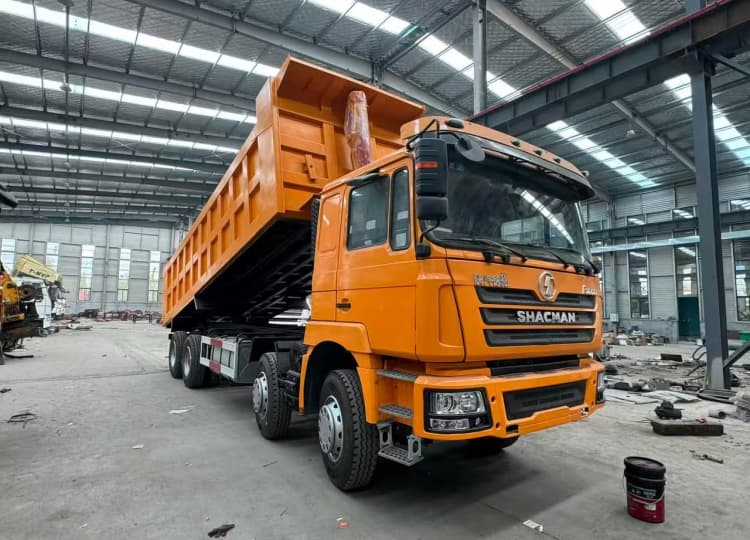
Fatigue life evaluation relies on a layered testing stack, not a single measurement. NDT non-destructive testing, including ultrasonic and magnetic particle inspection, identifies subsurface cracks and fatigue initiation points. Dimensional inspection checks for permanent deformation, which signals that the material has already passed its elastic limit.
Service history review maps overload events, accident records and operating environments to estimate historical stress cycles. Material sampling and hardness testing confirm whether heat cycles or corrosion have degraded the material’s fatigue resistance.
All these data points feed into the fatigue model. The final acceptance decision is not based on one test result, but on the combined picture of how much usable fatigue life remains.
The business impact for fleet operators
Fatigue-based acceptance directly controls TCO and safety risk. If a reman supplier ignores fatigue limits and accepts high-fatigue assets, the resulting unit will have a much higher chance of sudden structural failure. Downtime will be unpredictable, and warranty claims will spike. These failures are especially dangerous because they strike under heavy load, creating road safety hazards and operational disruption.
Fleet buyers who source formal remanufacturing gain a consistent risk baseline. They know the asset has passed fatigue screening before any rebuild work begins. The published residual fatigue margin also supports more accurate residual value forecasting and longer, more reliable service intervals.
Many low-cost rebuilds skip this critical step. They accept any rolling chassis that can be patched together, passing the hidden fatigue risk to the fleet owner. The upfront saving disappears quickly after a major structural failure.
Closing thought
Fatigue life is not an optional extra check in formal remanufacturing workflow. It is the foundation of remanufacturing core acceptance. It answers the fundamental question: does this base asset still have enough built-in material safety margin to support a full, predictable second lifecycle?
Without fatigue life evaluation, formal remanufacturing work becomes just another repair activity. With it, formal remanufacturing workflow turns used heavy assets into auditable, predictable industrial assets that align with OEM design intent and stable fleet TCO planning.